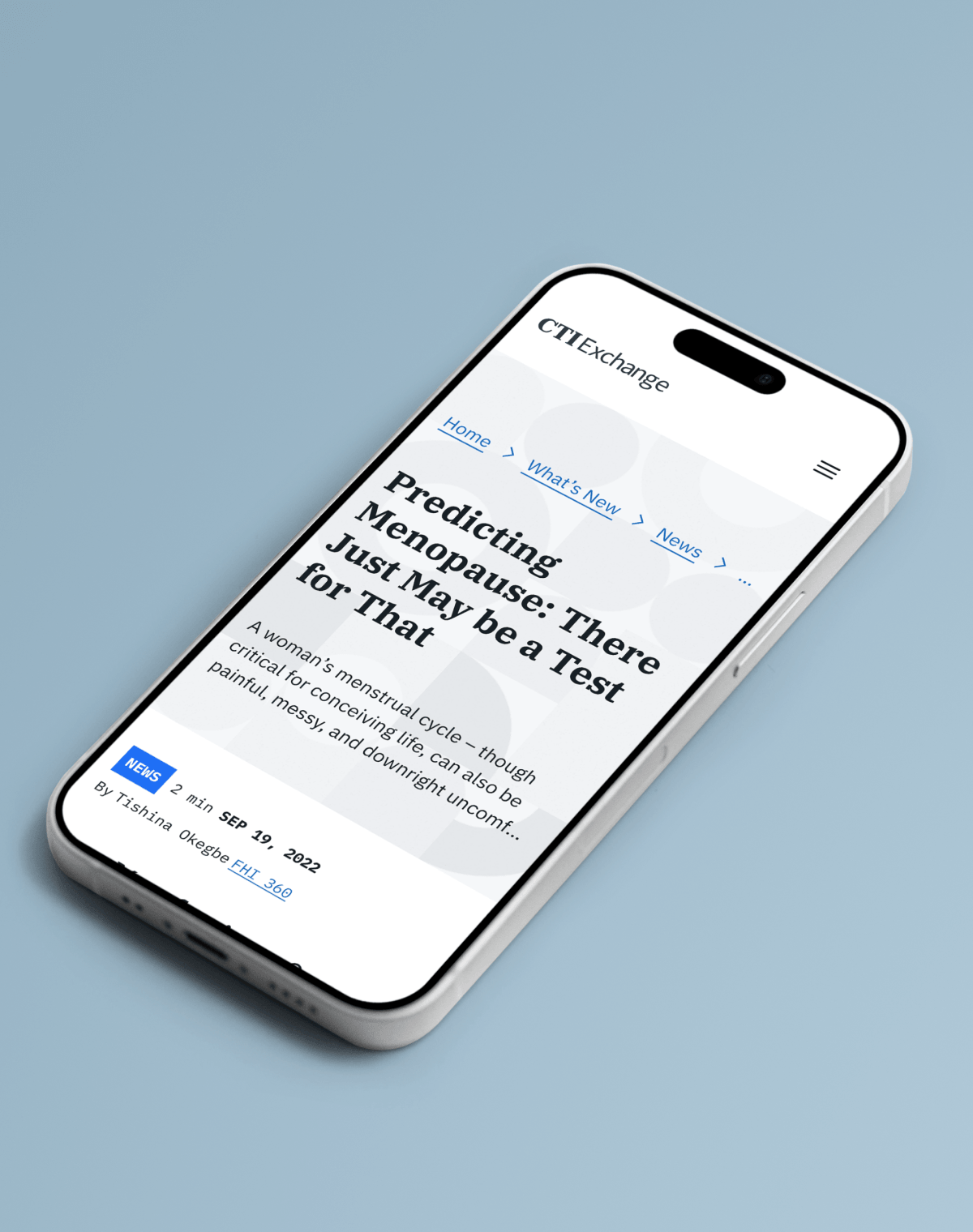
Who are FHI 360?
FHI 360 is a global nonprofit that works to improve health and wellbeing in over 60 countries. Their Product Development & Introduction (PDI) team focuses on expanding access to affordable, voluntary family planning options in low- and middle-income countries, with this specific project backed by the Bill & Melinda Gates Foundation.
They asked us to redesign the CTI Exchange, bringing together a resource library, contraceptive pipeline database and new community hub into one connected experience.
The challenge
The existing CTI Exchange website had real academic credibility and an established audience, with the Calliope contraceptive pipeline database alone containing 243 entries, with references in seven major journal publications. But the platform had outgrown its infrastructure. Built on Wix, it had reached the limits of what the technology could support. Its three distinct components – the main website, resource library, and Calliope database – were mostly siloed, making it difficult for users to move between research, resources and data. Search was limited, and the resource library had grown unwieldy with content that wasn't always specific to contraceptive development.
The platform needed to serve two very different audiences:
- Researchers new to the field who needed orientation and access to experts
- Career specialists who wanted quick, focused updates on contraceptive R&D developments.
Now in its third round of Gates funding, FHI 360 wanted to go further than just a redesign. The new platform needed to support interactive learning and engagement, providing the global community with a space to lead and participate in discussions, events and live sessions alongside the existing resources they already relied on.
Our approach
Discovery and co-creation
We were appointed through a competitive RFQ process and began with a thorough discovery phase. Working closely with FHI 360's team, we mapped the project goals across the three platform components, identifying where integration would have the most impact.
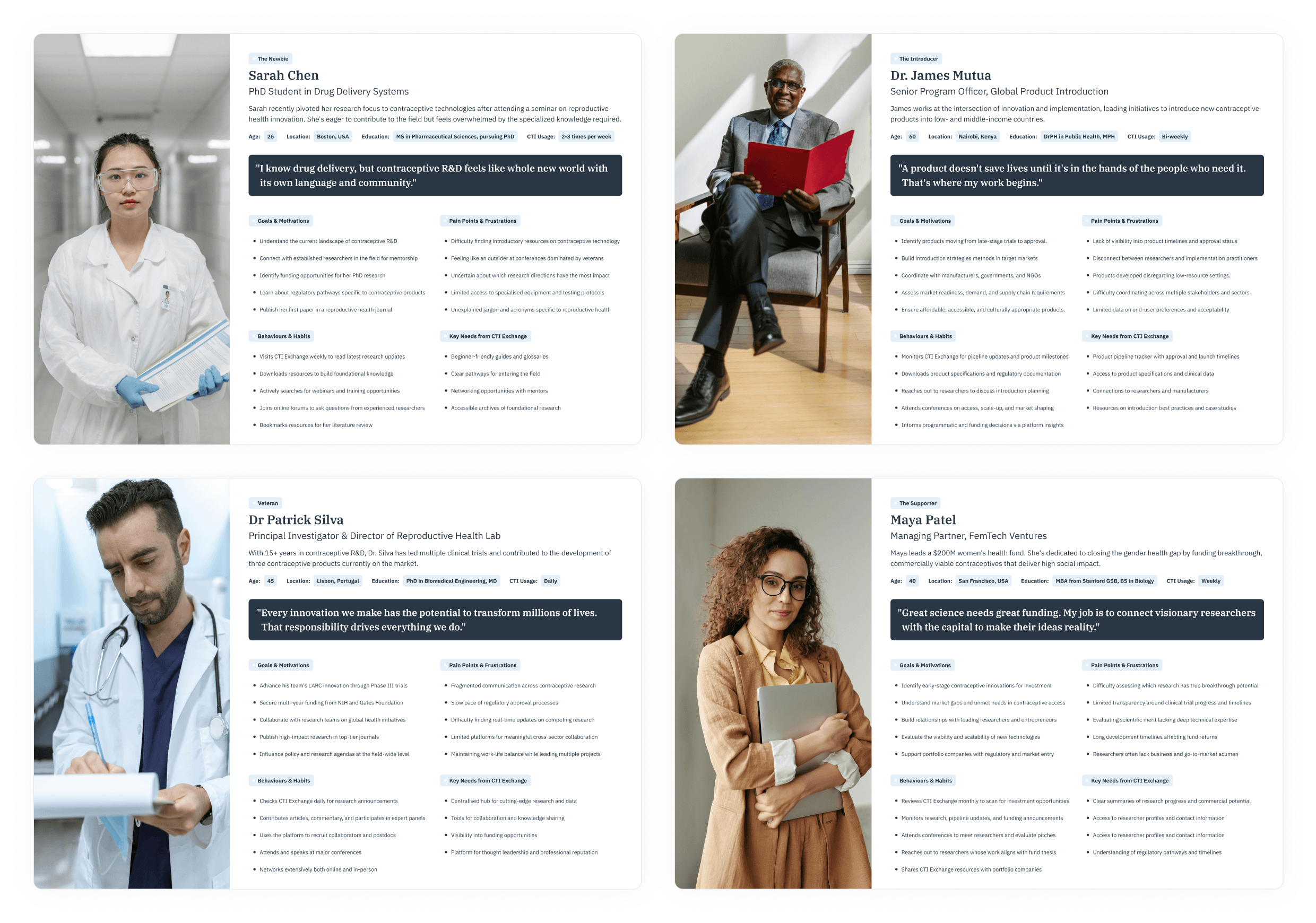
The redesign was shaped by an extensive co-creation process led by FHI 360, involving multiple rounds of interviews and group sessions with partners and collaborators. This research produced thematic analysis, user personas and journey maps for key user groups, giving us a clear picture of how the research community actually used the platform and what they needed it to become. We used these insights to inform prototyping, with rounds of feedback refining the design through to alpha and beta testing before launch.

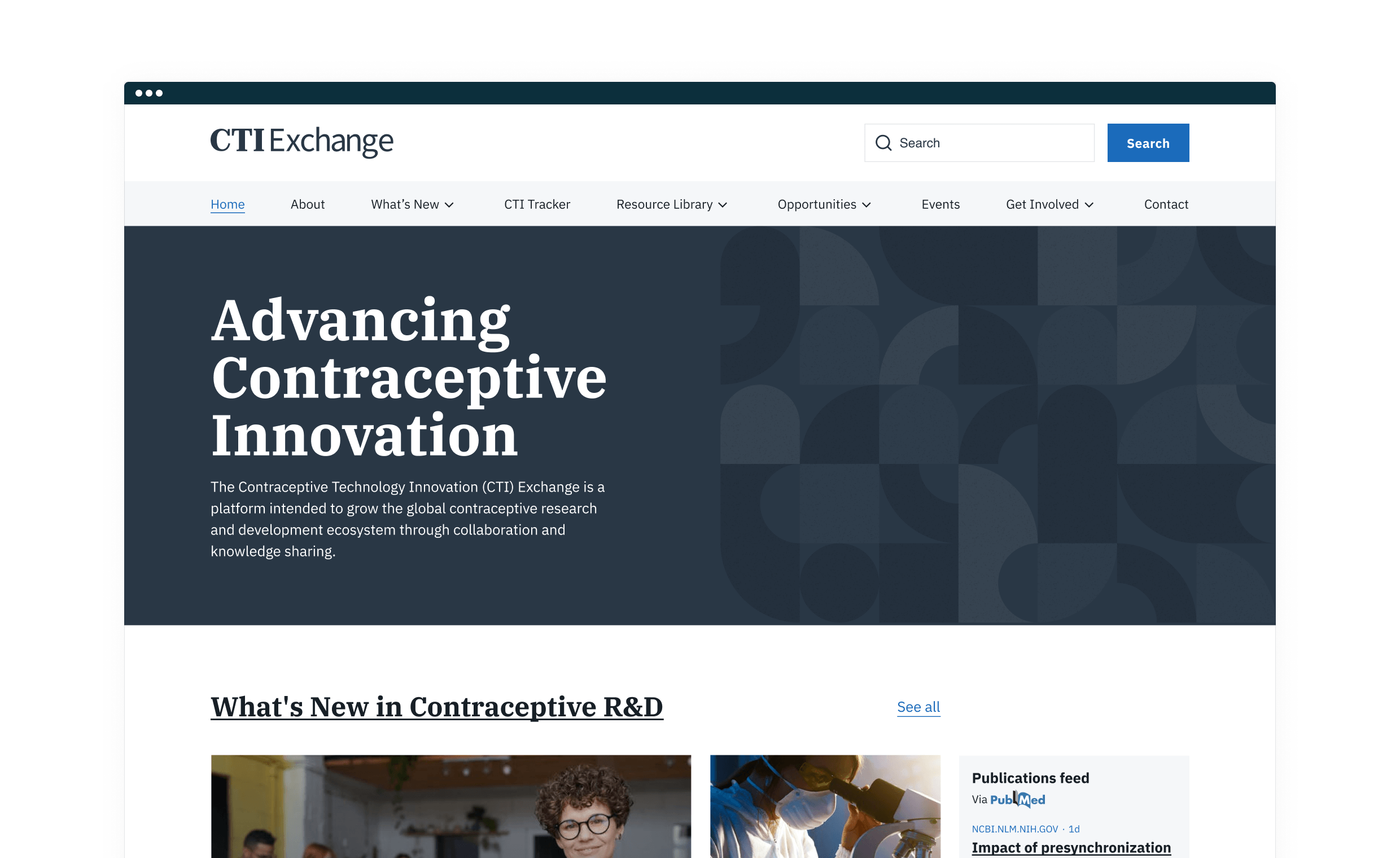
Platform, search and community
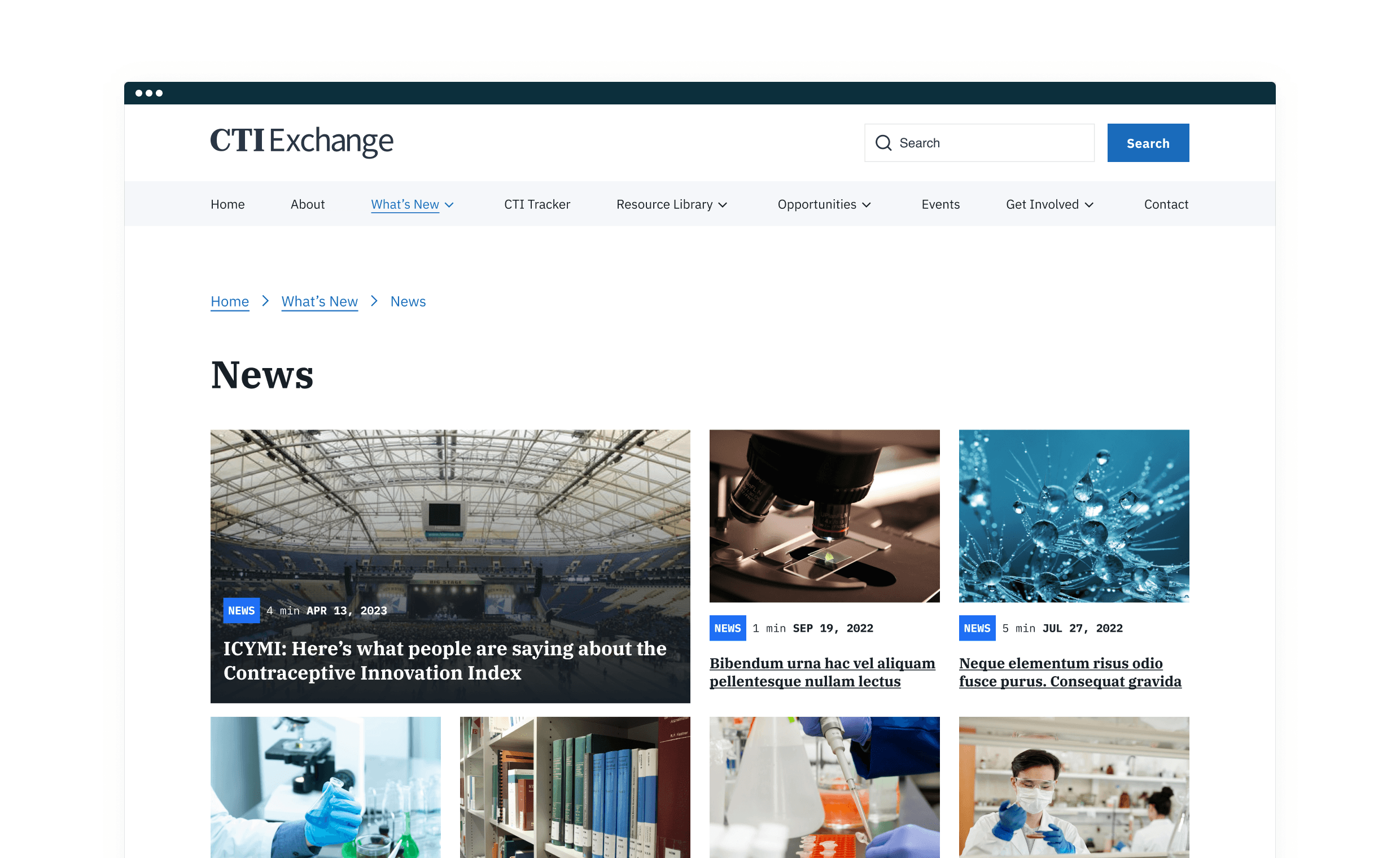
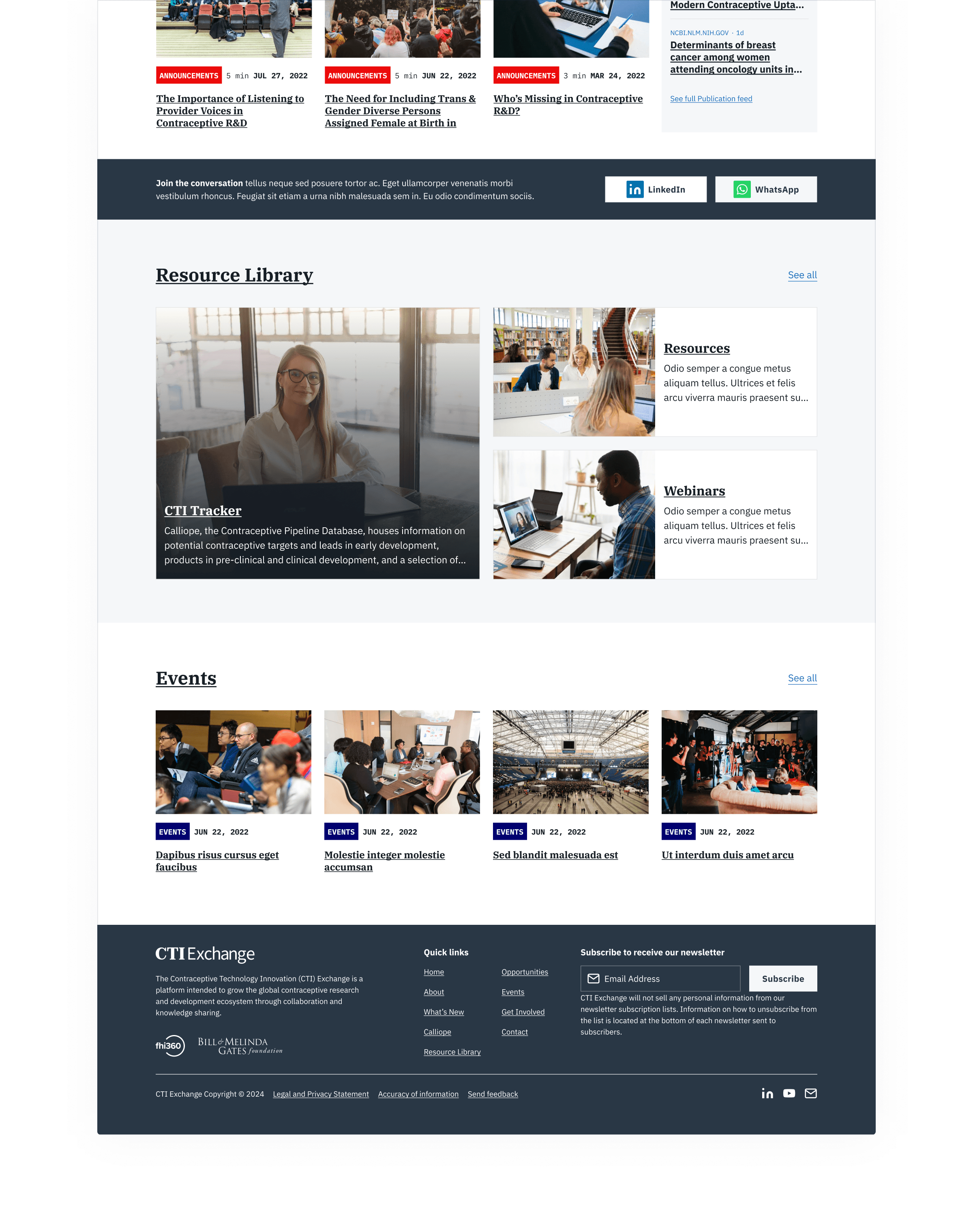
We migrated the platform from Wix to Drupal, bringing the website, resource library and Calliope database together into a single connected experience. Enterprise-grade search powered by Solr gave users fine-grained filtering across all site content, by category, date, development stage and other relevant criteria, replacing the basic search that had made navigation difficult.
We consolidated the existing taxonomy so that articles, links and contraceptive references were all treated as 'resources' with consistent metadata. This made them easier to search, share and discuss regardless of format. The Calliope database was streamlined to focus on products under active development, with an archive created for discontinued entries, to ensure the data remained focused and current.
The most significant addition was Muse, a new interactive community hub built on well-established open-source technology with deep Drupal integration. This gave the CTI Exchange something it had never had: a dedicated space for live discussion, collaboration and knowledge exchange. Community members could participate in groups, events, discussion forums and live chats, with everything directly linked to resources and data elsewhere on the site. Content posted in the community could reference resources, and community activity could feed through automatically on the original resource page – a significant improvement to the siloed experience of the old platform.
The design drew on magazine-style and science publication layouts which FHI 360 were keen on, to ensure legibility with an engaging, fresh approach minimising overwhelm. Additionally, the platform needed to feel credible and professional while remaining approachable enough to draw in researchers at all career stages.